Chemotherapy is an important part of breast cancer treatment. It helps destroy cancer cells and lowers the risk of the disease spreading or coming back. While it is highly effective, chemotherapy can also affect healthy cells in the body. One common side effect that many patients experience is mouth sores.
Mouth sores can make simple activities like eating, drinking, brushing your teeth, or even talking uncomfortable. The good news is that they can usually be managed with proper care, and in most cases, they improve once the treatment is completed.
Understanding why they happen and knowing how to take care of them can make your treatment journey much more comfortable.
Why Does Chemotherapy Cause Mouth Sores?
Chemotherapy medicines work by targeting cells that grow and divide quickly. While this is useful for destroying cancer cells, they also affect other fast growing healthy cells, including those lining the inside of the mouth.
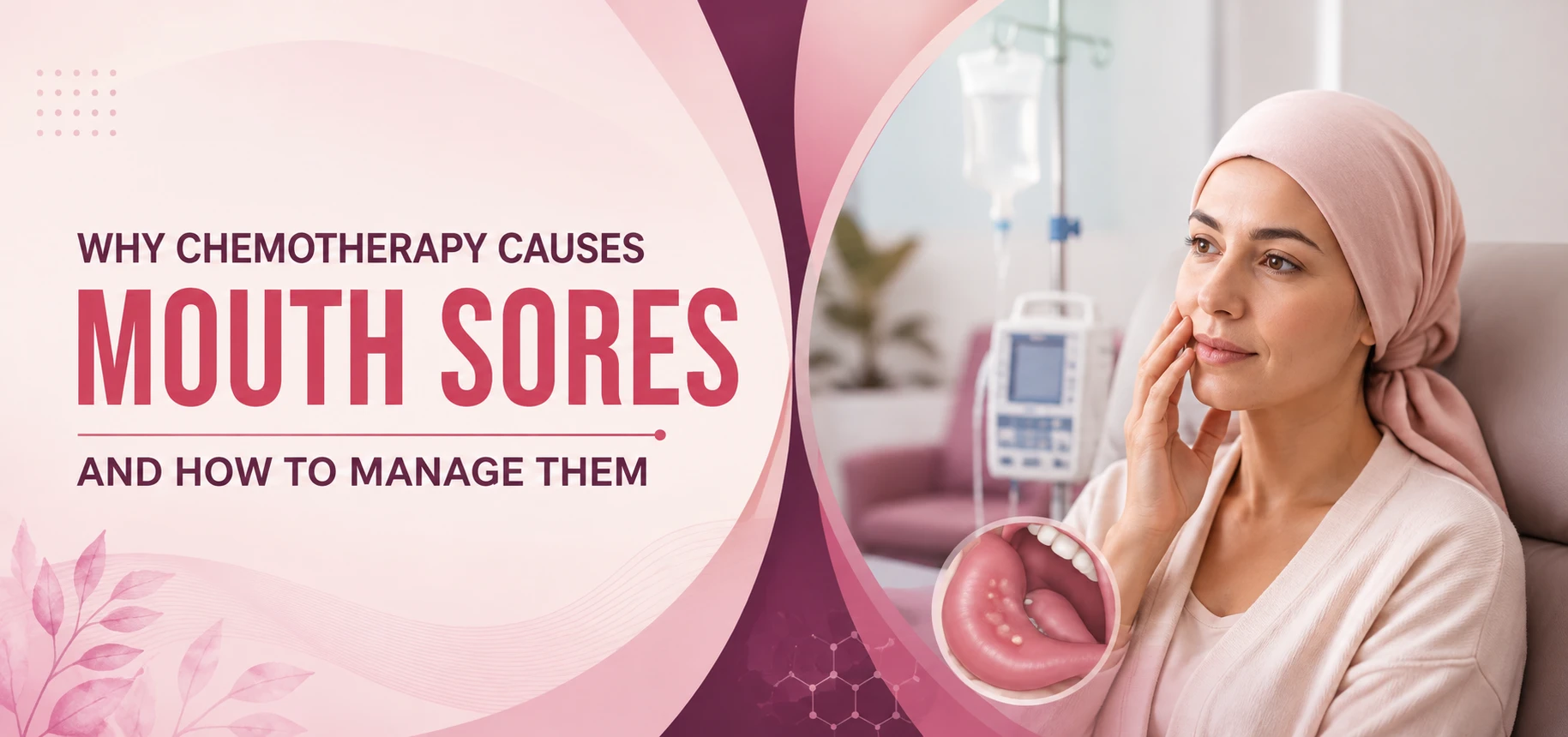
As these healthy cells become damaged, the lining of the mouth becomes thin, sensitive, and inflamed. This condition is known as oral mucositis. It usually develops a few days after chemotherapy begins and may last until the mouth lining starts healing.
Not everyone undergoing chemotherapy will develop mouth sores. The risk depends on the type of chemotherapy drugs used, the dosage, and your overall health.
What Do Mouth Sores Feel Like?
Mouth sores may appear as small ulcers or red patches inside the mouth. They can occur on the cheeks, tongue, lips, gums, or the roof of the mouth.
Common symptoms include:
1. Pain or burning inside the mouth
2. Difficulty eating or swallowing
3. Dry mouth
4. Increased sensitivity to spicy or acidic foods
5. White patches or ulcers
6. Bleeding from sore areas
7. Difficulty speaking comfortably
Sometimes, mouth sores can also increase the risk of infection because the protective lining inside the mouth becomes weaker.
How Can You Manage Mouth Sores?
Although mouth sores can be uncomfortable, there are several ways to reduce the discomfort and support healing.
Maintain Good Oral Hygiene
Brush your teeth gently using a soft bristled toothbrush after meals and before bedtime. Use a mild toothpaste if regular toothpaste causes irritation. Keeping the mouth clean helps prevent infections.
Rinse Your Mouth Frequently
Your doctor may recommend rinsing your mouth several times a day with a salt and baking soda solution or a prescribed mouth rinse. This helps keep the mouth clean and reduces irritation.
Avoid mouthwashes that contain alcohol, as they can make the soreness worse.
Choose Soft Foods
Soft foods are easier to eat when the mouth is sore. Khichdi, curd, dal, mashed potatoes, oats, soft fruits like bananas, smoothies, soups, and well cooked vegetables are often more comfortable than crunchy or spicy foods.
Let hot foods cool slightly before eating to avoid further irritation.
Stay Hydrated
Drink plenty of water throughout the day. Sipping water regularly can reduce dryness and keep the mouth moist. Ice chips may also provide temporary relief if recommended by your doctor.
Avoid Foods That Can Irritate
Try to avoid spicy, salty, acidic, or very hot foods until the sores heal. Citrus fruits, pickles, fried snacks, and carbonated drinks may increase discomfort.
Use Medicines as Prescribed
If the pain becomes severe, your oncologist may prescribe pain relieving gels, protective mouth coatings, or medicines to reduce inflammation. Never use over the counter products without medical advice during chemotherapy.
When Should You Contact Your Doctor?
While mild mouth sores are common, you should inform your oncology team if:
1. You are unable to eat or drink properly.
2. The pain becomes severe.
3. You develop a fever.
4. There is bleeding that does not stop.
5. You notice white patches or signs of infection.
6. The sores prevent you from taking your medicines.
Early treatment can prevent complications and help you continue your cancer treatment without unnecessary interruptions.
A Few Simple Precautions Can Help
Before starting chemotherapy, it is often helpful to have a dental check up to address any existing dental problems. During treatment, avoid tobacco and alcohol, stay well hydrated, and follow your doctor's instructions for oral care.
Remember that every patient responds differently to chemotherapy. Some may experience mild discomfort, while others may need additional support. Do not hesitate to discuss any new symptoms with your treatment team.

 Dr. Pragati Singhal


