Starting chemotherapy often brings many questions. One of the most common is whether you will need a chemotherapy port. If your doctor has recommended one, it is natural to feel a little anxious, especially if you have never had a minor surgical procedure before.
The good news is that port placement is a simple and commonly performed procedure. It is designed to make chemotherapy safer, more comfortable, and easier throughout your treatment journey. Knowing what to expect before and after the procedure can help you feel more prepared and confident.
What Is a Chemotherapy Port?
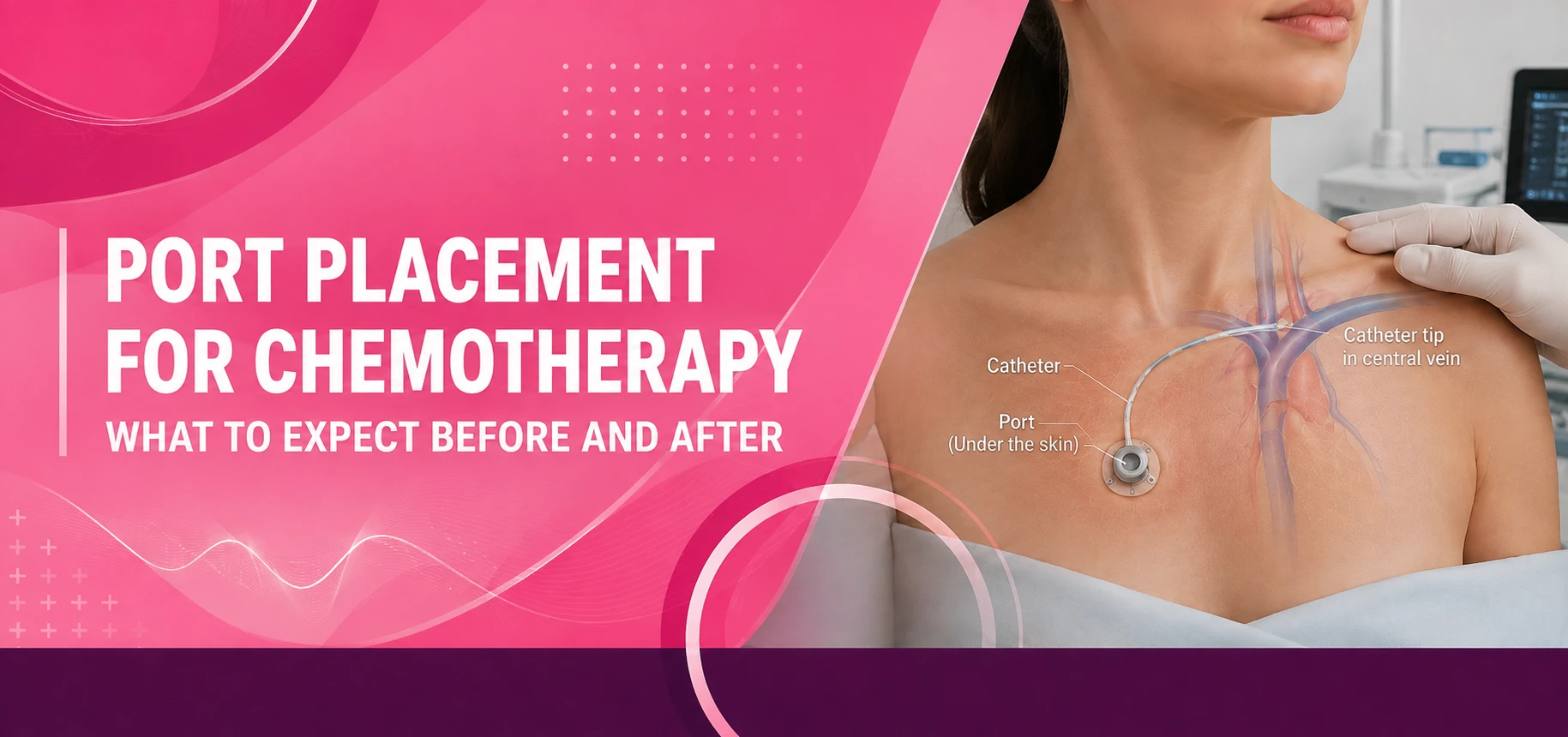
A chemotherapy port, also called a chemo port or implantable port, is a small medical device placed just under the skin, usually on the upper chest. It is connected to a thin tube called a catheter, which goes into a large vein leading to the heart.
Instead of inserting a needle into the veins of your hand or arm every time you receive chemotherapy, medicines are given through the port. Blood samples can also be taken from the same port in many cases.
Why Is a Port Recommended?
Not every patient needs a chemotherapy port. Your breast cancer specialist may recommend one if:
1. Your treatment involves several chemotherapy sessions.
2. The medicines can irritate or damage smaller veins.
3. Your veins are difficult to access.
4. You may need frequent blood tests along with treatment.
A port protects your veins from repeated needle pricks and reduces the discomfort of multiple intravenous lines during treatment.
What Happens Before the Procedure?
Before the procedure, your doctor will explain why the port is needed and answer any questions you may have.
You may be advised to:
1. Share your complete medical history and current medications.
2. Inform your doctor if you are taking blood thinners.
3. Avoid eating or drinking for a few hours if instructed.
4. Arrange for someone to accompany you home if sedation is used.
The procedure is usually done as a day care procedure, meaning you can go home on the same day.
During Port Placement
Port placement is usually performed under local anaesthesia, sometimes with mild sedation to help you stay relaxed.
A small incision is made near the collarbone or upper chest. The catheter is carefully placed into a large vein, and the port is positioned beneath the skin. The incision is then closed with stitches or surgical glue.
The entire procedure generally takes about 30 to 60 minutes.
Most patients feel pressure during the procedure but should not experience significant pain.
What Should You Expect After the Procedure?
It is normal to have mild soreness, swelling, or bruising around the incision site for a few days. These symptoms usually improve with time and simple pain medicines recommended by your doctor.
The small bump under the skin is the port itself. Although it may feel unusual at first, most patients become accustomed to it within a short period.
Your healthcare team will tell you when the port is ready to be used for chemotherapy, which is often immediately or within a few days, depending on your treatment plan.
Caring for Your Port
A chemotherapy port requires very little daily care.
Your medical team will flush the port regularly to keep it working properly. Between treatment sessions, you can usually continue with your normal daily activities.
Once the incision has healed, most people can shower, exercise gently, and wear regular clothing without difficulty.
However, contact your doctor immediately if you notice:
1. Redness or warmth around the port.
2. Swelling that increases instead of improving.
3. Fever or chills.
4. Pain that becomes severe.
5. Fluid leaking from the incision site.
6. Difficulty during chemotherapy administration.
These symptoms may need prompt medical attention.
Will the Port Be Removed?
Yes. A chemotherapy port is not permanent.
Once your treatment is complete and your oncologist is confident that it is no longer needed, the port can be removed through another simple procedure. Removal is generally quicker than placement and is usually done under local anaesthesia.

 Dr. Pragati Singhal


