A breast cancer diagnosis brings many questions. One of the most common is, "Has the cancer spread?" While imaging and biopsy help understand the tumour in the breast, your doctor also needs to know whether nearby lymph nodes are involved. This is where axillary lymph node assessment becomes an important part of planning treatment.
The axillary lymph nodes are the lymph nodes located in the armpit. They are usually the first place breast cancer cells may travel if they move beyond the breast. Assessing these lymph nodes before surgery helps your breast oncosurgeon decide the most suitable treatment approach and avoid unnecessary procedures whenever possible.
What Are Axillary Lymph Nodes?
Lymph nodes are small, bean shaped structures that are part of the body's immune system. They help filter harmful substances and fight infections. The group of lymph nodes in the armpit is called the axillary lymph nodes.
Not every patient with breast cancer has cancer in these lymph nodes. In fact, many women are diagnosed early, before the disease has spread to them.
That is why proper assessment is so important instead of making assumptions.
Why Is Assessment Done Before Surgery?
The condition of the axillary lymph nodes plays a major role in deciding the treatment plan.
Your surgeon needs this information to understand:
1. Whether cancer has spread beyond the breast
2. The stage of the disease
3. The type of surgery that may be required
4. Whether chemotherapy should be given before surgery
5. If radiation therapy is likely to be needed after surgery
Knowing this information beforehand allows your treatment team to create a personalised plan that offers the best possible outcomes.
How Are Axillary Lymph Nodes Assessed?
The assessment usually starts with a physical examination. Your doctor will gently examine the underarm area to check for enlarged or hard lymph nodes.
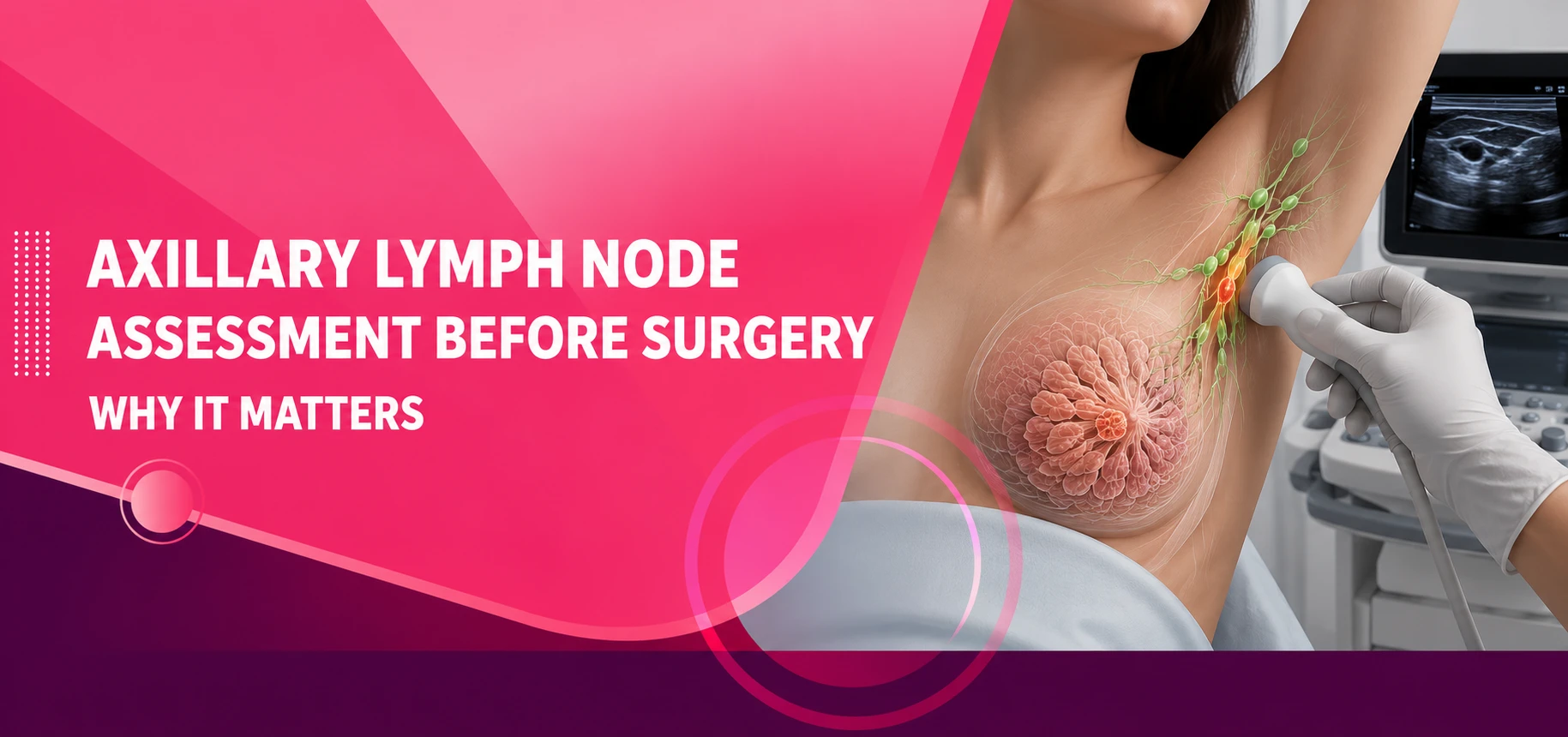
This is often followed by an ultrasound of the axilla. Ultrasound is a simple, painless imaging test that provides detailed pictures of the lymph nodes. It helps identify any nodes that appear enlarged or have features that require further evaluation.
If an abnormal lymph node is seen, your doctor may recommend a fine needle aspiration or a core needle biopsy. A small sample is taken from the lymph node and examined under a microscope to confirm whether cancer cells are present.
These tests provide valuable information before surgery without requiring a large procedure.
How Does It Affect Surgical Planning?
The findings from the lymph node assessment directly influence the type of surgery you may need.
If there is no evidence of cancer in the lymph nodes, many patients undergo a sentinel lymph node biopsy during breast surgery. This involves removing only the first few lymph nodes that drain the breast. If these nodes are free of cancer, no further lymph node surgery is usually needed.
If cancer is confirmed in the lymph nodes before surgery, the treatment plan may be different. Some patients benefit from chemotherapy before surgery to shrink the tumour and reduce cancer in the lymph nodes. Others may require removal of more lymph nodes during surgery, depending on the extent of the disease and current treatment guidelines.
The goal is always to provide effective cancer treatment while reducing the risk of complications such as arm swelling, stiffness, or limited shoulder movement.
Does Every Patient Need the Same Treatment?
No. Breast cancer treatment is highly individualised.
Two patients with similar breast tumours may receive different treatment plans based on their lymph node status, tumour biology, age, overall health, and other factors. Modern breast cancer care focuses on giving each patient the treatment that is most appropriate for their specific condition rather than following a one size fits all approach.

 Dr. Pragati Singhal


